


Download PDF Messiah in the Passover, by Mitch Glaser
Why you should review daily when you have spare time? Have you discovered the specific factors of you to read? Many are aiming to have reading behavior for their better future, but as a matter of fact, it can be fallen short. Exactly what's wrong? Is the reading routine a society, truly routine, need, or something others? If you truly would like to know how many people attempt to motivate themselves to have reading habit, you an also be influenced of it.
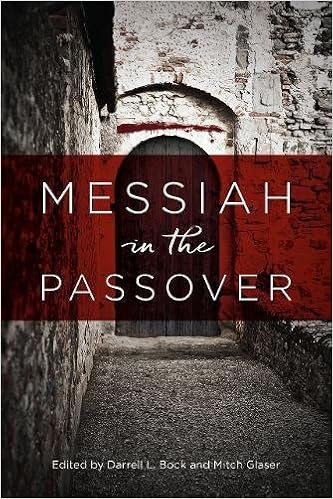
Messiah in the Passover, by Mitch Glaser

Download PDF Messiah in the Passover, by Mitch Glaser
Becoming a good person can be seen from the hobby as well as activities to do daily. Many great tasks are completed. Yet, do you love to read the books? If you do not have any type of wish to review, it seems to be really absence of your finest life. Reading will certainly not just give you much more expertise however additionally give you the new better thought and also mind. Many basic people always check out such a book everyday to save also few times. It makes them feel completed.
By investing few times in a day to check out Messiah In The Passover, By Mitch Glaser, some experiences as well as lessons will certainly be gotten. It will certainly not relate to just how you must or take the tasks, however take the benefits of exactly how the lesson and also perception t acquire. In this instance, this presented book actually becomes inspirations for the people as you. You will constantly require brand-new experience, won't you? Yet, in some cases you have no enough time and money to undergo it. This is why, via this publication, you can get rid of the desire.
Yeah, soft data ends up being a reason why you need to read this book. If you bring the published book for some areas, it will certainly make your bag to be heavier. When you can stick with the soft documents, it will certainly not have to bring hefty point. However, the Messiah In The Passover, By Mitch Glaser in soft documents can be a choice when you choose some areas or only stay at house. Please read this publication. It is not only the recommendation; it will be ideas for you as well as you're your life to move on much better.
Associated with this problem, you will certainly likewise figure out May publications that can be resources for your life. It is not only this type of topic; you might additionally discover others just as good as this publication to offer. Certainly, what we offer is exactly what best in this globe. So, you could not be fretted to select Messiah In The Passover, By Mitch Glaser as one of motivating analysis publication. Currently, regardless of what to do, you have to get this publication and obtain complying with the system to be a lot easier and also quicker.
About the Author
Darrell L. Bock is Executive Director of Cultural Engagement and Senior Research Professor of New Testament Studies at Dallas Theological Seminary. A former president of the Evangelical Theological Society, he is the author of the best-selling Breaking the Da Vinci Code and numerous works in New Testament studies, including Jesus According to Scripture.
Read more
Product details
Paperback: 384 pages
Publisher: Kregel Publications (May 12, 2017)
Language: English
ISBN-10: 9780825445378
ISBN-13: 978-0825445378
ASIN: 082544537X
Product Dimensions:
6.2 x 0.5 x 8.8 inches
Shipping Weight: 1.2 pounds (View shipping rates and policies)
Average Customer Review:
4.5 out of 5 stars
9 customer reviews
Amazon Best Sellers Rank:
#324,776 in Books (See Top 100 in Books)
Darrell Bock and Mitch Glaser have edited several recent books on the topic of Israel, including To the Jew First: The Case for Jewish Evangelism in Scripture and History (2008), The Gospel According to Isaiah 53 (2012), The People, the Land, and the Future of Israel (2012), and Israel, the Church and the Middle East (2018), all published by Kregel. This volume collected essays from the staff of Chosen People Ministries, an evangelistic mission to Jews led by Glaser.In the introduction to the collection, Mitch Glaser asks “Why Study the Passover?†For a Jewish person, Passover is a celebration of God’s deliverance of his people from Egypt. The feast celebrates the symbols of Sinai, Torah, and redemption. For a Christian, celebrating Passover is an opportunity to deepen one’s appreciation for the Jewishness of the Gospel. For Glaser, this “common experience†can better communicate the Gospel to Jewish friends (20).The first set of essays gather the biblical foundations for Passover. Five essays survey portions of the canon which mention Passover: Passover in the Torah (Robert Walter), the Writings (Richard H. Flashman), the Prophets (Gordon Law), the Gospel of Luke (Darrell L. Bock), the Gospel of John (Mitch Glaser). The weakest of these chapters is the section on the prophets, simply because there are virtually no references in either the former or latter prophets to the Passover. Law could have included references to a “second Exodus†(Isaiah 40-55, for example) in this section, but instead he focuses his short chapter on the links between Elijah and the modern Seder. There are certainly links between Moses and Elijah, but many of these are post-biblical traditions. Both Bock and Glaser deal with the problem of the Last Supper as a Passover meal. Both weigh the evidence and conclude it was in fact a Passover meal, although there are several outstanding difficulties with the conclusion. The final essay in this section also argues the Last Supper was a Passover meal. Brian Crawford examines several passages in 1 Corinthians to conclude Paul used the Passover to deepen the Corinthian church’s experience of the Gospel (109). Communion is therefore passed on Passover tradition.The second section of the book collects three essays Passover in Church history. Scott P. Nassau deals with the Passover in the early church (“Passover, the Temple, and the Early Churchâ€). Early church history is tangled with post A.D. 70 Jewish Christianity. Hagg includes the Ebionites and Nazarenes as examples of Christian (or better, semi-Christian) groups who continued to keep Passover well into the Christian era. Of special interest is Melito of Sardis, a Hellenistic Jew who converted to Christianity and wrote Peri Pascha, “Concerning the Passover.†Although Melito created a Christian Haggadah, by the time of the council of Nicean there was a clear movement away from Passover in Christian practice. While Nassau only briefly mentions the Quaterodeciman debate, Gregory Hagg introduces the “Passover Controversies in Church History†with the Quaterodecimans. The name means “fourteen†and refers to Christians who chose to celebrate Easter on Passover (14 Nisan). Citing Ignatius’s letter to the Philippians, any Christian who celebrates Passover with the Jews “is a partaker with those that killed the Lord and his apostles†(132). By the time of Nicea, the Quaterodecimans were persecuted. While Hagg’s article begins to deal with Christian anti-Semitism (specifically blood libel), Olivier Melnick traces Christian attitudes toward Jewish people through the modern era.A pair of essays forms the third until of the book on Jewish Tradition and the Passover. First, Zhava Glaser collects references to the Passover in Rabbinic Writings (the Mishnah, Talmud, Tosefta). It is in this vast literature that many of traditions now part of a Passover Haggadah began to develop. But many of these practices are rooted in biblical texts. For example, the first mention of four cups of wine is in the Mishnah, but Glaser follows Baruch Bosker in arguing the cups drawn on biblical imagery in the Torah itself. After the loss of the Temple, the Passover Haggadah was transformed into a celebration of the sacrificed Lamb which looked forward to a future redemption of Israel (168). Second, Daniel Nessim discusses the fascinating tradition of the Aï¬koman at Passover. I first ran across the practice in Craig Evans’s Word Commentary on Mark 8:27-16:20 (p. 390; Evans cites Daube, who appears in Nessim’s essay). The word ×פיקומן is from Greek ἀφικόμενος, “he who comes.†Nessim argues the word is an acronym for seven elements of the Passover meal (see the chart on page 172). What is intriguing about the practice is the possibilityIn the fourth section of the book focuses on the communication of the Gospel through Passover. First, Michael Cohen discusses what the Passover says about atonement. This seems strange since atonement is not mentioned in connection to Passover in the Torah, but it is the backdrop to the New Covenant and the sacrificial lamb does foreshadow Jesus’s once-for-all sacrifice (Hebrews 9:11-12). He then traces the theme of atonement through four stages represented by the Passover mean. Second, Larry Feldman offers several examples of the Gospel in the Passover Seder. He begins with the karpas, the dipping of the parsley into saltwater. The parsley is dipped twice into the sale water to remind participants of both the tears shed while in slavery in Egypt and the crossing of the Red Sea. More significant, the parsley is related to the hyssop used to sprinkle the blood of the lamb. He suggests viewing the Seder in the light of its fulfillment in Jesus reminds the Christian of the time when God will wipe away all tears (Rev 21:4) as well as the redemption we have in Jesus (Rom 6:22-23). The section includes two brief sermons, “Jesus, the Lamb of God†(Richard E. Freeman) and “The Third Cup†(David Secada).Finally, the fifth section of the book has four essays on celebrating Passover as a Christian. First, Cathy Wilson offers some practical advice on keeping Passover in a Christian home. She is clear that in the original Passover the shed blood of the lamb was central. The re-telling of the Passover story, the Christian ought to focus on Jesus as “our Passover lamb†(1 Cor 5:7). She narrates a Christian Haggadah similar to the “Messianic Family Haggadah†from Chosen People Ministries (Chapter 18). Although both follow the traditional order of service (seder), there are frequent references to New Testament when appropriate. Rachel Galilstein-Davis supplements this with “Passover Lessons for Your Children.†She begins with the observation that children are the most important part of a Passover celebration since the point of re-telling the Exodus is to re-inforce the story to the younger generation. She offers are new children’s lessons with crafts and other activities which highlight key aspects of Passover and teach a few Hebrew words along the way. Finally, Mitch Forman offers a few comments on Passover foods and even shares some recipes (including gefilte fish and roast brisket).The book includes nine appendices over twenty-three pages, a ten-page glossary of terms, nineteen pages of recommended reading and bibliography, and twenty-one pages of indices. Some of the appendices are valuable, for example “Passover Observances in Biblical History†and “Last Supper Sayings Compared,†of which are in charts. However, a list of the “Jewish and Protestant Canons of the Bible†and a map of the Exodus do not seem like a good use of space.Conclusion. Glaser began this book with an argument in favor of Christians celebrating Passover, or at least incorporating elements of Passover into their Christian worship. Christians ought to not simply be aware of the Jewish roots of Christianity, but to drink deeply in the waters of the Hebrew Bible. In doing so, they will more fully understand how God has worked in the past, how he is working in the present and will work in the future. However, there is some risk when importing the practice of Passover back into Christian worship. As Glaser himself admits, we really do not have any idea how much Jesus’s practice looked like a modern Passover celebration (24). It is possible some (gentile) Christians can become overly attracted to modern Jewish practice to the point they misunderstand the Body of Christ in the present age.This book is an excellent contribution to a Christian understanding of both ancient and modern Jewish celebration of Passover.NB: Thanks to Kregel for kindly providing me with a review copy of this book. This did not influence my thoughts regarding the work.
"Messiah In The Passover" is a good read for anyone wanting to learn more about Jesus Christ in the Passover. Written by a number of biblical scholars, including Messianic Jews, the book addresses several topics such as:1. How the Passover ties into the Torah, Lord's Supper, Prophetic Writings, and the Gospels of Luke and John.2. How the Passover was involved in the Temple and Church history.3. Various Jewish traditions in the Passover.4. How the Passover relates to the Atonement.5. Celebrating the Passover in your home.6. Various Passover recipes.7. Helpful background information (i.e, map of the Exodus, maps of Jerusalem during the Messiah's last days before His death/burial/resurrection, Hebrew months of the year, listing of books in the Hebrew Bible and Protestant Bible.Will be an excellent future reference for future lessons/messages/discussions/etc. Look forward to reading more deeply in the future. I was given a review copy by Kregel Publications in exchange for a fair review.
Have you ever wondered about how the Jewish Passover anticipate the Messiah? Or perhaps you might wonder what is the connection between the Passover and the Lord’s Supper? Or maybe you realized you simply don’t know anything about the Jewish Passover and you want to learn more about it and wonder what might be an available resource to learn more? If so this is the book for you.The two editors Darrell Bock and Mitch Glaser both did a good job compiling a highly qualified team to write on the topic of the Messiah and the Passover. I was quite impressed with the contributors and their background. The book consists of five parts. Part 1 which consists of five chapters presents the “Biblical Foundations†and really it is a biblical theology of the Passover from the Torah to the New Testament. I enjoyed this portion immensely. Part 2 is titled “Passover and Church History†which consists of three chapters. Then in Part 3 we have two chapters that explore “Jewish Tradition and the Passover.†The next four chapters make up part 4 of the book which is “Communicating the Gospel through the Passover.†Finally Part 5 is on “Celebrating Messiah in the Passover†which is made up of four chapters. After the conclusion the book also have 9 helpful appendices that include charts, maps and further explanations.I really enjoyed Part 1, 3 and 4 of the book. That doesn’t mean I didn’t enjoy the other parts of the book but these three sections stood out. First off I appreciate the book providing a biblical theology of the Passover; I often think the Passover is exclusively the domain of the law of Moses but the book did a good job showing how it is important and shows up elsewhere in the Old and New Testament. The discussion about the Jewish Tradition and the Passover also provided much needed additional background that I didn’t know before reading this book. In fact I felt every other page I was learning something new that I didn’t know before until I read the book. The book touches on a diverse aspect of the Passover from the Bible, church history, Jewish tradition and the actual practice and the preparation for the Passover and its incredible this was all done in a single volume.In terms of constructive criticism there was time I felt what I read in one chapter was already covered in the previous chapter. Also the book went on too long concerning anti-Semitism and anti-Jewish prejudices; don’t get me wrong I’m not anti-Jewish but after reading extended discussion about it I wonder if it went a bit too tangent from the book’s purpose, though I admit it was fascinating and morally right of the contributors to speak out against what is wrong. Also at times things were repetitive and a large factor for that is because the chapters were written by different contributors rather than just one individual. Also I’m not fully convinced that a Christian observance of the Passover is something for today in the church age although I think it is helpful and a powerful witness if it is done for the purpose of seeing it and being taught of how it leads us to Christ. Everything I said in terms of constructive criticism shouldn’t be taken that this book is bad; on the contrary all the contributors did an excellent job on a topic that historically has been misunderstood by Christians and which contemporary Christians today still largely haven’t appreciate just how it anticipates the Messiah. Get this book and read it to grow in your deeper love for God, the Messiah, the Gospel and how God used the nation of Israel as a vehicle for His redemptive plan.NOTE: This book was provided to me free by Kregel Publications without any obligation for a positive review. All opinions offered above are mine unless otherwise stated or implied.
Messiah in the Passover, by Mitch Glaser PDF
Messiah in the Passover, by Mitch Glaser EPub
Messiah in the Passover, by Mitch Glaser Doc
Messiah in the Passover, by Mitch Glaser iBooks
Messiah in the Passover, by Mitch Glaser rtf
Messiah in the Passover, by Mitch Glaser Mobipocket
Messiah in the Passover, by Mitch Glaser Kindle