Archive for Oktober 2011

Download Ebook The Great Deformation: The Corruption of Capitalism in America, by David Stockman

Download Ebook The Great Deformation: The Corruption of Capitalism in America, by David Stockman

Why should be this publication? It's all that you require currently. And even you don't need the message of this book directly now, you could locate the advantage some day. Someday, you will certainly feel that you are really lucky to discover The Great Deformation: The Corruption Of Capitalism In America, By David Stockman as one of your analysis materials. If you start to feel it, maybe, you cannot advise about this publication as well as can not discover where this book is. Hence, you can visit once again this book in this site, an internet site with million brochures of the books.
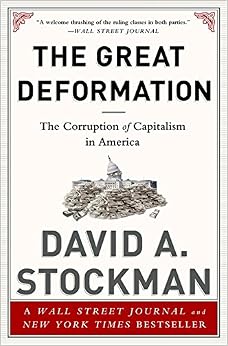
The Great Deformation: The Corruption of Capitalism in America, by David Stockman

The Great Deformation: The Corruption of Capitalism in America, by David Stockman


The Great Deformation: The Corruption of Capitalism in America, by David Stockman


Download Ebook The Great Deformation: The Corruption of Capitalism in America, by David Stockman

Feeling tired to invest the spare time or weekend or holidays without doing anything beneficial? Hanging around even lot of times is easy, very simple. But, are all helpful enough? It is not your time to invest the time squandered. This is the time to appreciate all free time, yet with such meaningful tasks. Even having holiday by vacations someplace, it is likewise useful. And also below, you can likewise save your few times to review a book; the The Great Deformation: The Corruption Of Capitalism In America, By David Stockman is just what we recommend for you.

This is why we advise you to consistently see this resource when you need such book The Great Deformation: The Corruption Of Capitalism In America, By David Stockman, every book. By online, you might not go to get the book store in your city. By this on the internet library, you could find the book that you truly intend to read after for very long time. This The Great Deformation: The Corruption Of Capitalism In America, By David Stockman, as one of the advised readings, tends to be in soft file, as all of book collections right here. So, you might additionally not await few days later to obtain and check out the book The Great Deformation: The Corruption Of Capitalism In America, By David Stockman.

Reading this The Great Deformation: The Corruption Of Capitalism In America, By David Stockman will certainly provide you priceless time to review. Also this is just a publication, the idea given is amazing. You could see how this book is served to earn the better future. For you who in fact do not like reading this publication, never mind. However, allow us to tell you something interesting from this publication. If you wish to make better life, get this book. When you want to undergo a wonderful life for now and also future, read this book.

To deal with this condition, many other people also try to get this book as their reading now. Are you interested? Pick this best book to offer today, we offer this book for you because it’s a kind of amazing book from professional and experienced author. Becoming the good friend in your lonely without giving boredom is the characteristic of The Great Deformation: The Corruption Of Capitalism In America, By David Stockman that we present in this website.

The Great Deformation: The Corruption of Capitalism in America, by David Stockman

About the Author

David A. Stockman was elected as a Michigan congressman in 1976 and joined the Reagan White House in 1981. Serving as budget director, he was one of the key architects of the Reagan Revolution plan to reduce taxes, cut spending, and shrink the role of government. He joined Salomon Brothers in 1985 and later became one of the early partners of the Blackstone Group. During nearly two decades at Blackstone and at a firm he founded, Stockman was a private equity investor. Stockman attended Michigan State University and Harvard Divinity School and then went to Washington as a congressional aide in 1970. He is also the author of the New York Times bestseller The Triumph of Politics: Why the Reagan Revolution Failed.

Read more

Product details

Paperback: 768 pages

Publisher: PublicAffairs; Reprint edition (September 2, 2014)

Language: English

ISBN-10: 9781610395236

ISBN-13: 978-1610395236

ASIN: 1610395239

Product Dimensions:

6.2 x 2 x 9.2 inches

Shipping Weight: 2 pounds (View shipping rates and policies)

Average Customer Review:

4.3 out of 5 stars

419 customer reviews

Amazon Best Sellers Rank:

#105,417 in Books (See Top 100 in Books)

Mr. Stockman's book, The Great Deformation, makes a persuasive case against "crony capitalism" and Keynesian economics. In example after example he attacks Republican and Democratic administrations for destroying the free market and bowing to the "K street" lobbyist that demanded more government spending to prop up the economy. His overall view of the economy, especially the state of our current economic crisis, is insightful and useful in a macroeconomic sense. However, to an investor or someone looking for immediate guidance in policy decisions it is almost useless. A congressman reading this book would come away with foreboding, but no immediate answers. Stockman himself admits his offered remedies cannot be implemented. Investors know that bubbles, and we are in a huge bubble now according to The Great Deformation, will burst, but when they will burst is unknown and unknowable. Thus, the book is useful on an overall theoretical basis and perhaps knowledge on what will eventually happen and why, but in knowing what to do right now it isn't useful.Stockman offers several ideas that could be implemented in an ideal world; however, these ideas are not tied together by an overall theory. Stockman believes in the free market, a smaller government, and in government safety nets for people who pass a means test, which place him into an economic middle ground where government protects at a basic level but lets the market decide who wins and loses the economic game on a larger scale. He is neither a classical economist or a Keynesian. But what he actually is on a theoretical basis is unknown and this leaves us wondering what he would recommend in situations he has not covered.Stockman's analysis fails on many levels when it comes to specifics. Like many a liberal he wants the military cut to Eisenhower levels and he wants to eliminate the conventional military force and depend on a nuclear deterrent alone. This was exactly what Truman tried and it resulted in an invasion of Korea. The communist correctly reasoned that the US would not risk a nuclear war over S. Korea; thus, the US entered the war with surplus WWII equipment and poor training for the front line troops. The results were nearly a disaster. Naturally, Stockman does not discuss this setback. Will we risk a nuclear war for Kuwait? No is the obvious answer, and that would allow dictators to conquer small nations with impunity. So the military reduction idea he offers has been tried and it failed. We do not need to be the world's policeman, but we must be able to protect vital national interests. What those are is up for debate, as Syria clearly shows, and perhaps a reduced military would cut back presidential adventurism; however, a fall back to the nuclear deterrent alone is foolish in the extreme.Mr. Stockman admits his work is a polemic, which indeed it is, but it is a poorly organized polemic. The author throws ideas out faster and with more jargon than Dennis Miller answering a question about Apple's Steve Jobs, but they are also about as well organized. The Great Deformation goes over the same ground many times and makes the same points many times. The history of our republic, from an economic view, should have been handled in one place rather than repeated in chapter after chapter. Also, Mr. Stockman makes the mistake of critiquing decisions without context. When Nixon made the decision to go off the gold standard, gold was streaming out of the country in exchange for dollars and he faced an extraordinarily hard set of choices. Instead of laying out the choices and telling us why Stockman's choice was better he just dumps on Nixon's decision. Without the background context of the decisions his criticisms are not understandable. Yes, I get it that he doesn't like the decision and from an macroeconomic point of view the decision (whatever it was) was bad, but it is hard to agree with a person who leaves out the context of the decisions. Spending more time on context could have strengthened Stockman's arguments appreciably.Then there is the vitriol. This constant spewing of venom actually makes the book harder to read. Stockman's last chapters try to justify the harsh language because he thinks we are destroyed and there is no fix. We do not have the political will to fix the problems, thus they will destroy us, according to the author. I agree that the politicians have destroyed the USA with their Keynesian policies, but harsh language and jargon will not help put the arguments over. If Mr. Stockman organized his work and left out the jargon and the vitriol the book could have been reduced by over 100 pages and made improved arguments for his position. He also assumes the reader has a rather firm grasp of various economic principles; however, an appendix would have been useful to fully explain some of these ideas in a non-jargon filled fashion (like Mercantilism). By leaving out the unnecessary attacks and by improving his organization he could have cut the size of the book dramatically and still put in an explanatory appendix on basic economic ideas.AD2

For devoted followers of David Stockman's blog, this book is like fundamentalist scripture. Anyone trying to better understand the intensity of the daily diatribes on his Contra Corner website needs to read The Great Deformation to gain full immersion into his torment. He believes that our global economic system has become progressively unhinged over the past three decades and is now poised for a catastrophic collapse unlike any that has gone before. The book is a kind of conservative answer to Karl Marx's theory of capitalism's end-game crisis, except that Stockman sees statist intervention - which has grown in scope over most of the past century - as the problem's cause, not its solution. In his view, Keynesian policymakers are like doctors continuously upping the dosage of bad medicine in a self-defeating effort to cure a disease they themselves have caused.The primary targets for Stockman's wrath are the world's central banks, and in particular the U.S. Fed. He sees The Fed, under Paul Volcker, as having done God's work in the early 1980's in taming the ruinous inflation that followed Richard Nixon's 1971 decision to default on America's gold-for-dollars promise that had for the preceding two decades successfully underwritten the world's monetary system. When Volcker retired, however, the devil took control in the person of his successor Alan Greenspan. Both Greenspan and his own successor, Ben Bernanke, poured liquidity onto every small crisis and drove the short-term policy rate along a secular downtrend that finally guttered out at zero in 2008, where it has remained. Stockman sees this chronically loose monetary policy as doing little to help the "Main Street" economy, but everything to help Wall Street, which he believes has turned the Fed into its lap dog. Virtually free money, procured in the repo and other short-term markets, is used to fund aggressive leveraged speculation that drives the prices of stocks and other financial assets to unsustainable levels that inevitably collapse in crashes such as occurred in 2008. Connected fast-money players are able to read the signals and dump or reverse their positions in time to escape the full weight of the carnage, which is born mostly by hapless Main Street investors trapped in slow-moving mutual funds. The Fed then starts the process all over again by re-inflating the markets with fresh liquidity infusions.Stockman is a free-market conservative, but many of his rants would sound at home on the pages of Mother Jones, Daily Kos, or any of the other leftwing soapboxes where the same nails are hammered. Like his leftist counterparts, Stockman rails about the growing concentration of wealth in America which, in contrast, he blames not on "capitalism" but on the cozy relationship that's developed between Wall Street and the government's monopoly bank, i.e. the Fed. Exclusive hedge funds and private equity firms are the vehicles through which the rich are able to compound their wealth. These are, of course, the very players who have learned how to exploit the Fed's interest rate suppression to pursue leveraged buy-outs, debt-financed share repurchases and other forms of financial engineering that provide high returns for their wealthy principals while increasing systemic risk for everybody else. Stockman believes that these destructive practices would be minimized in an environment where free markets were allowed to punish them with high interest rates.There is an air of wounded innocence about David Stockman, who in his youth once attended Harvard Divinity School. He has a sincere and honest belief in the efficacy of free markets, which he sees being trampled everywhere he looks. He first rose to prominence in the early 1980's as Budget Director for the Reagan White House, where he arrived with a sharp mind and bright eyes, hoping to serve the cause of honest budgeting among ideological soulmates. What he found instead was an administration that had been hijacked by budget busters on all sides: monomaniacal "supply side" tax-cutters and "neocon" advocates for unconstrained military spending. It was, paradoxically, the Reagan administration that gave rise to the belief that "deficits don't matter", a notion that has metathesized into a lethal mantra now three decades later in the era of Barak Obama. Stockman believes that the combination of costly imperial overreach and the Ponzi-scheme financial logic inherent in the structure of social entitlement programs has now taken America to a point of no return. The colossal rickety machine continues to lumber along only because the Fed manages the funding cost through interest rate suppression. And that lasts only so long as foreigners go on buying the bonds needed to fund the deficits. These days are now numbered. And because America had led the world since World War II, its other major economies, including China's, have fallen in line behind us as we all descend into the same treacherous dysfunction. The crack-up, when it comes, will be global.Following his rancorous split with Reagan, Stockman found his way to Wall Street, of all places, like an honest priest stumbling into a brothel. He then wound up at a private equity firm, no doubt initially believing in that industry's self-defining mission of strengthening free enterprise by ridding companies of waste. What he found himself doing instead was taking control of vulnerable businesses, stripping them of resources, loading them up with unsustainable debt burdens, and plotting profitable exit strategies for himself and his partners. At one point he was even personally indicted for fraud, and while the charges were eventually deemed groundless and dropped, the former divinity student has to have begun questioning the road he had taken in life.Traumatized by experience, he moved on to become a full time financial writer' He now declaims to us like Cassandra wailing from the top of the temple stairs in doomed Troy. In the bitterly partisan climate of contemporary America, Stockman is refreshingly non-partisan as he slams with equal virulence politicians of both major parties. He despises Richard Nixon for destroying sound money with his 1971 decision. He holds George W. Bush in even lower regard for accelerating the fiscal doomsday clock by embracing big government, costly military entanglements and lower taxes for rich people all at the same time. Democrats Jimmy Carter and Bill Clinton actually get off with a lighter touch, since Stockman credits them with at least a modicum of respect for fiscal prudence. Barak Obama, however, is another story altogether, as he has doubled down with the hated Keynesian poison since the day he came into office.There are, in my judgment, stylistic problems with Stockman's writing. He's shrill and grossly repetitive, and he probably could have covered the ground nicely in this book in half of its 712 pages. He writes in the rolling cadences of an angry prophet, and he at times allows passion to outrun his logic. This book is full of facts and figures, but apparently not wanting footnotes to slow him down, Stockman provides not a single one.Still, I've learned to trust him, and I find most of his case compelling, despite his exaggerations, his unwillingness to see much good or wisdom in anyone, or his inability to offer practical solutions to the problem he describes. His last chapter is entitled "Sundown In America", which strikes me as far too peaceful a metaphor for the explosive picture he paints in this book.

The Great Deformation: The Corruption of Capitalism in America, by David Stockman PDF
The Great Deformation: The Corruption of Capitalism in America, by David Stockman EPub
The Great Deformation: The Corruption of Capitalism in America, by David Stockman Doc
The Great Deformation: The Corruption of Capitalism in America, by David Stockman iBooks
The Great Deformation: The Corruption of Capitalism in America, by David Stockman rtf
The Great Deformation: The Corruption of Capitalism in America, by David Stockman Mobipocket
The Great Deformation: The Corruption of Capitalism in America, by David Stockman Kindle

The Great Deformation: The Corruption of Capitalism in America, by David Stockman PDF

The Great Deformation: The Corruption of Capitalism in America, by David Stockman PDF

The Great Deformation: The Corruption of Capitalism in America, by David Stockman PDF

Download PDF , by Gene Luen Yang

Download PDF , by Gene Luen Yang

Reading will certainly not make you constantly imaging and dreaming about something. It ought to be the manner that will get you to really feel so sensible and also clever to undergo this life. Also analysis might be uninteresting, it will certainly depend on guide type. You could choose , By Gene Luen Yang that will certainly not make you really feel bored. Yeah, this is not kin of enjoyable book or spoof publication. This is a book where each word will give you deep significance, yet easy and basic said.

, by Gene Luen Yang

, by Gene Luen Yang


, by Gene Luen Yang


Download PDF , by Gene Luen Yang

Now welcome, one of the most inspiring book today from a very professional author on the planet, , By Gene Luen Yang This is guide that many individuals in the world awaiting to release. After the revealed of this publication, guide lovers are really interested to see just how this book is actually. Are you one of them? That's very appropriate. You may not be regret currently to seek for this book to read.

Reading will certainly not only give the new understanding regarding what you have actually read. Reading will certainly also educate you to believe open minded, to do sensibly, as well as to overcome the monotony. Checking out will certainly be always good as well as purposeful if the product that we review is also a good book. As example, , By Gene Luen Yang is a god publication to read for you. This suggested publication turns into one of guides that will certainly get over a brand-new maker to spend the time sensibly.

When someone should visit the book stores, search store by store, shelf by shelf, it is quite bothersome. This is why we offer guide collections in this web site. It will certainly relieve you to search the book , By Gene Luen Yang as you such as. By searching the title, publisher, or writers of the book you really want, you could find them quickly. In the house, workplace, or even in your method can be all finest location within internet links. If you want to download the , By Gene Luen Yang, it is really easy then, due to the fact that now we extend the connect to buy as well as make deals to download and install , By Gene Luen Yang So easy!

After getting the book, you can start your activity to read it, also in your leisure every where you are. You can recognize why we prepared make it as advised book for you. This is not only regarding the pertinent subject for your analysis resource but likewise the more suitable publication with high quality materials. So, it will not make perplexed to really feel concerned not to obtain anything from , By Gene Luen Yang

, by Gene Luen Yang

Product details

File Size: 32211 KB

Print Length: 80 pages

Publisher: Dark Horse Books (July 2, 2013)

Publication Date: July 2, 2013

Sold by: Amazon Digital Services LLC

Language: English

ASIN: B00D9DCSA0

Text-to-Speech:

Not enabled

P.when("jQuery", "a-popover", "ready").execute(function ($, popover) {

var $ttsPopover = $('#ttsPop');

popover.create($ttsPopover, {

"closeButton": "false",

"position": "triggerBottom",

"width": "256",

"popoverLabel": "Text-to-Speech Popover",

"closeButtonLabel": "Text-to-Speech Close Popover",

"content": '

' + "Text-To-Speech is not supported for this title." + '
'

});

});

X-Ray:

Not Enabled

P.when("jQuery", "a-popover", "ready").execute(function ($, popover) {

var $xrayPopover = $('#xrayPop_AC9998FA527F11E9BE97BC8C13F52862');

popover.create($xrayPopover, {

"closeButton": "false",

"position": "triggerBottom",

"width": "256",

"popoverLabel": "X-Ray Popover ",

"closeButtonLabel": "X-Ray Close Popover",

"content": '

' + "X-Ray is not available for this item" + '
',

});

});

Word Wise: Not Enabled

Lending: Not Enabled

Enhanced Typesetting:

Not Enabled

P.when("jQuery", "a-popover", "ready").execute(function ($, popover) {

var $typesettingPopover = $('#typesettingPopover');

popover.create($typesettingPopover, {

"position": "triggerBottom",

"width": "256",

"content": '

' + "Enhanced typesetting improvements offer faster reading with less eye strain and beautiful page layouts, even at larger font sizes. Learn More" + '
',

"popoverLabel": "Enhanced Typesetting Popover",

"closeButtonLabel": "Enhanced Typesetting Close Popover"

});

});

Amazon Best Sellers Rank:

#192,366 Paid in Kindle Store (See Top 100 Paid in Kindle Store)

This is the newest addition to the series of avatar comics, and follows the same formatting as the others. The book is hardback and has quite a bit of weight to it compared to other books. The cover has vibrant colors, as do all of the pages contained in it. The only difference between this version of the comics and the individual volumes is that this contains all three volumes of Smoke and Shadow, has bigger pages, concept art, and notes from the creators in the margins of the pages. For the price, you would be losing money if you bought all the volumes individually, so I highly recommend getting this edition.As for the story, it's no worse than the other avatar comics. It's not better either, but maintains the same level of quality that you would expect from the avatar universe. The plot features Zuko as the main character, as does 2/3 of the other comic series, which can be disappointing if you're expecting much from other characters. The only plus to this is that Zuko's supporting characters are incredibly interesting, and the lore of the fire nation doubly so.Overall, this is an amazing book and I will continue to look forward to purchasing future avatar series comics.

The library editions are the way to go for these Avatar additions! These books are hard cover with a mix of matte and glossy finish. They're all larger books (think the size of a game guide.) The art inside is top notch (as expected) and includes some thoughts from the creators on the side panels. The back includes step by step process art for characters and cover art.Smoke and Shadow, specifically, focuses on Zuko after he has become emperor and the rising tensions between the fire nation proper and long conquered fire nation territories that identify with being Earth nation. A new threat has popped up throughout the Fire Nation where children are being snatched from their homes. Zuko and Aang must find and cut off this threat before the people of the Fire Nation depose Zuko.Of the 4 library editions, this compilation has been my least favorite, but that in no way means that I thought the story was anything less than excellent. I encourage all Avatar fans to read these if they want to continue journeying with Aang and see how the world of Korra is created.

I jumped on the Avatar train way too late and binged all three seasons. Afterwards, I thought I had had enough, but I was intrigued by the availability of a comic book series. I was a bit tentative at first because the show was so good and I didn't want my opinion of the show to go down, but the books have made me even more of a fan. The story has the same tone of the show, and the artwork is amazing. I love how Gurihiru is able to capture the different bending styles.After finishing this volume, I couldn't wait to start "The Search"!

I love this book. After binge watching all three seasons of Avatar: The Last Airbender with my family, I was seriously missing the gang...most of all, Aang. I kept wondering why they didn't make more seasons and wishing that I could find more stories of Aang after the series ended. I am so glad that I came across the Avatar: The Last Airbender books. The illustrations are beautiful and the dialogue is on point with the characters. I read this book with my boys almost every night before bedtime. It makes us feel like we're back in their world, though I personally still miss hearing their actual voices. I am definitely going to get the other books in this set and highly recommend this book.

This is the first issue of a great series! Off to a slow start, the drawings get better as the story goes, as well as the dialogue. As a matter of fact the second issue features many moments that seem like they come straight out of the show. If you love the series, I highly recommend these comics.The comic series is broken up to 3 issues per storyline. I found this first storyline to be kind of like the author just getting their feet wet in the Avatar universe. The second story, The Search, is where it really starts to get good. But I still recommend the Promise just so you can be treated to Toph's Metal Bending school. It's perfect! There are also some other story elements that you might be sorry you missed if you skip ahead.And, I know it's noted elsewhere, but the creators of the show work closely with the creation of this series as well.

, by Gene Luen Yang PDF
, by Gene Luen Yang EPub
, by Gene Luen Yang Doc
, by Gene Luen Yang iBooks
, by Gene Luen Yang rtf
, by Gene Luen Yang Mobipocket
, by Gene Luen Yang Kindle

, by Gene Luen Yang PDF

, by Gene Luen Yang PDF

, by Gene Luen Yang PDF

Download Ebook The Republic, by Plato

Download Ebook The Republic, by Plato

The Republic, By Plato. Is this your spare time? Just what will you do after that? Having extra or spare time is extremely remarkable. You could do everything without force. Well, we intend you to exempt you couple of time to read this publication The Republic, By Plato This is a god publication to accompany you in this downtime. You will not be so difficult to understand something from this book The Republic, By Plato Much more, it will help you to obtain far better information as well as encounter. Also you are having the terrific jobs, reading this publication The Republic, By Plato will certainly not add your mind.

The Republic, by Plato

The Republic, by Plato


The Republic, by Plato


Download Ebook The Republic, by Plato

After becoming effective to finish reading a book, have you been enough? As a book fan, it will certainly not be enough to read the book. Continue as well as continue! This is what you have to do to enhance as well as constantly create the expertise. Bok is one that will make you really feel addicted. But, it is in the positive term. Locate guides that will provide positive addition for you currently.

As recognized, experience and also experience about session, amusement, and also knowledge can be obtained by just reading a publication The Republic, By Plato Also it is not straight done, you could recognize even more about this life, regarding the globe. We provide you this correct and also very easy means to get those all. We provide The Republic, By Plato as well as lots of book collections from fictions to science whatsoever. Among them is this The Republic, By Plato that can be your partner.

Maturing from elementary to the grown-up, reviewing books will certainly allow various needs to think. Sometime, we require the book as a result of the task deadline. However in various other time, you could read again this The Republic, By Plato, for not only the task deadline demand but additionally for excited. So, reads this book your great excited to check out. When you have enough to seek for one more book that can not make you really feel pleased, you will constantly search for various other sources, won't you? This is why we come to you to help in locating the ideal publication.

Thinking about guide The Republic, By Plato to review is also required. You could pick guide based upon the favourite themes that you like. It will involve you to love reading other publications The Republic, By Plato It can be likewise about the requirement that obliges you to check out the book. As this The Republic, By Plato, you could discover it as your reading publication, even your preferred reading book. So, find your favourite publication below and obtain the link to download the book soft data.

The Republic, by Plato

About the Author

Born to a politically connected and aristocratic family between 428 and 423 B.C. , Plato received a good standard of education at an early age, and was able to immerse himself in the intellectual community of Ancient Athens. His most notable contemporary and mentor was Socrates, an eccentric but highly capable philosopher who was to feature as a principle character in most of Plato's scholarly writings. Owing to his high standard of education in art, mathematics, rhetoric and philosophy, Plato was able to assemble a comprehensive philosophy of his own via his favoured form of writing which was the dialogue. In total, over thirty of these Platonic dialogues have survived the passage of time - and together they form the backbone of Ancient Greek philosophy. After enjoying success as a writer and academic, Plato in 385 B.C. founded The Academy. This school was to unite the most capable thinkers of Greece, and would help to advance learning throughout Greek society's Golden Age. It was in the Academy that Plato would instruct and apprentice Aristotle, who was to go on to gain renown as a philosopher and scholar. Owing to his reputation Plato was hired by Dion, whose nephew Dionysus II was the rightful ruler of Sicily - Dion wished his nephew to receive a good education in the art of sound and wise governance. However Dionysus II became suspicious and accused both Plato and Dion of conspiracy - after some time spent under arrest, Plato returned to his homeland. In his late period, Plato continued to tutor and mentor the best young minds of Athens, and he would perish around 348 B.C. having lived beyond the age of eighty. Today Plato's legacy remains lauded: the philosopher ably used logic and reason to imbue insight on democratic governance, while developing a cohesive philosophy on topics such as art, metaphysics, justice and the 'Theory of Forms' - his iconic take on how ideas related to reality.

Read more

Product details

Paperback: 194 pages

Publisher: CreateSpace Independent Publishing Platform (June 11, 2016)

Language: English

ISBN-10: 1534626913

ISBN-13: 978-1534626911

Product Dimensions:

6 x 0.4 x 9 inches

Shipping Weight: 12.5 ounces (View shipping rates and policies)

Average Customer Review:

4.3 out of 5 stars

882 customer reviews

Amazon Best Sellers Rank:

#101,218 in Books (See Top 100 in Books)

I'm trying to alternate between fun audiobooks and ones that I feel I should read rather than having any desire to do so. Plato's Republic was in that second group. I honestly expected to hate it. But it's one of the fundamental classics. So on the list it goes to listen to while I commute. And I loved it. It may have been that it was a full cast audio but it honestly did feel like being with a group. Maybe a quarter of the way in I realized what it reminded me of: when you are at a very mellow party in college and people start discussing things that are really "deep, man." And there's that one person who is way too into it and dominates the conversation. So that tickled me most of the book. The other thing that was really engaging was how much of the ideas in this book can be seen in the modern world. In that way it made it feel like an anthropological study and it kept making me say, "neat," even when I disagreed with whatever point was being made. Overall I would recommend this audiobook version because it made it come alive.

Whew, that was an intense read! I gave five stars because after careful consideration I realized that Alan Blooms interpretive essay really helped me to understand the The Republic to a different degree. The first ten books are the shoes, the interpretive essay is the shoe lace and it ties all of it up very neatly. To read something over 2,000 years old that’s been translated from Ancient Greek is a task in itself, I commend this translations interpreter he did a stellar job. This book is Heavy and not a book you can just pick up and expect to read in a weekend, its not littered with images that create a perfect picture for you to burn thru, it’s page after page after page of thought, so it slows you down, a lot. Each page forces you to think about what you’re reading, sometimes you have ZERO Idea and that’s ok, that’s where Bloom’s Interpretive Essay comes in. To pick up this book and commit to finishing it is a Challenge I highly recommend, you’ll walk away a better person with a sense of accomplishment and more thoughtful mind. I’ve read over 200 books and I think it’s safe to say that this was the most challenging book I’ve ever put my mind too, if your looking for a challenge then you’ve found it. Happy reading 📖

While the book was written in 380 BCE it is, perhaps, more relevant today than at any time in its history. You would almost think that Plato had pulled a Dr. Who and transported himself to 2018 before sitting down to write. It couldn’t be more tailored to the political, social, and economic environment in which we currently find ourselves.Plato/Socrates use elenctic (i.e. Socratic) questioning to explore human happiness and the specific virtue of justice. Socrates believed: “by curing people of the hubris of thinking they know when they do not…makes them happier and more virtuous than anything else.”Socrates and his friends pursue this journey by defining the ideal city – Kallipolis—and its rulers and constitution, the idea being that truth is often easier to discern on a large scale (i.e. a city) that can then be applied on a smaller scale (i.e. the individual).The debate focuses on the four virtues of an ideal city—wisdom, courage, temperance, and justice. And results in the conclusion that the human soul is made up of three parts—the appetitive, spirited, and rational—and that virtue, ultimately proven to be the source of happiness exists when the three are in balance and harmony.Socrates ultimately defines five political/economic models—philosopher/king, timocracy, oligopoly, democracy, and tyranny. And he ranks them, from good to bad, in the order listed, essentially arguing that they form an inverse ladder in which one inevitably deteriorates into the latter.That means, in essence, that oligopoly inevitably deteriorates into democracy, which he clearly doesn’t not hold in very high esteem. Freedom, by his logic, is unsustainable. In the simplest terms, the unfettered pursuit of freedom by everyone ultimately leads to conflict and that, in turn, inevitably leads to a race for power defined by manipulation, deception, and injustice.As a result, democracy inevitably leads to tyranny as the ruling class preys—quite deceitfully—on the fears of the masses that they, the masses, are being sidelined and their interests ignored. Sound familiar?The elenctic, commonly known as the Socratic method, has been largely stripped from our political and academic discourse. People are sure of what they know and don’t want to know anything else. The thirst for victory has, as a result, crushed the thirst for knowledge.There are many reasons for this. Technology, which gave rise to the echo chamber, has certainly contributed. Impatience has also played a big role. Elenctic takes time and our collective attention spans have dwindled to near nothing. Education, I believe Plato would say, however, is probably the real culprit. Oppression, sheltering, and victimization have replaced Plato’s definition of the ideal education: physical training, musical training (including prose and speech), mathematics, and dialectic.On the surface, critics will find no shortage of targets in the logic. More than anything else, however, both the argument and any criticism that might be drawn, reflect the imprecision of language itself and the difficultly this presents for philosophers willing to tackle the biggest and most relevant issues of life.That, however, simply reinforces Plato’s encouragement to ask more questions, listen more attentively with an open mind, and never assume you know the real answer. Which is why his ultimate encouragement it seems to me is not to admire things that are beautiful or just, but to truly understand what beauty and justice are. Sadly, I can think of no leader today who is doing anything even remotely close to that.Read it. It will make you a better leader, citizen, parent, friend, and person.

Plato’s Republic (Greek: Πολιτεία, Politeia; Latin: Res Publica) was written in 380 BC and this version was translated by Benjamin Jowett in 1871. It is a fiction book in the format of a discussion between Socrates and others. It aims to debate and conclusively determine the meaning of Justice. Socrates, the main character, was a Greek philosopher and the mentor of Plato. His philosophy is the basis and origin of the western philosophy. As a high schooler who often debates similar ideals and questions, I found this book to be very eye-opening and fascinating. Socrates doctrine proves itself true even in this day in age. That just goes to show, when it comes to ideals and behavior, humans haven’t changed very much. Republic is very well written and even after thousands of years it still captures its audience with its provoking revelations and relatable content. If you often find yourself debating similar questions then you might just find your answers here, but if you dislike philosophy or are set in your ways you probably will not find this book to be interesting. For me, this book was an enjoyable challenge and I definitely would read it again.

This Kindle edition is not as advertised and entirely useless. First and foremost, it is absolutely not an annotated edition; there is not a single note anywhere in the text. For that matter, there are no Stephanus numbers—the universal page numbers for all editions of Plato—so you will never be able to either cite this edition or find anything referred to by other writers. I'm not even sure that this is the Reeves/Grube translation, as there is no publication information whatsoever. Avoid this like the Athenian plague.

The Republic, by Plato PDF
The Republic, by Plato EPub
The Republic, by Plato Doc
The Republic, by Plato iBooks
The Republic, by Plato rtf
The Republic, by Plato Mobipocket
The Republic, by Plato Kindle

The Republic, by Plato PDF

The Republic, by Plato PDF

The Republic, by Plato PDF

Ebook Download The New New Journalism: Conversations with America's Best Nonfiction Writers on Their Craft

Ebook Download The New New Journalism: Conversations with America's Best Nonfiction Writers on Their Craft

Reading will certainly not make you always imaging and also dreaming about something. It needs to be the way that will certainly order you to really feel so wise and smart to undergo this life. Even reading may be boring, it will certainly depend upon guide type. You could choose The New New Journalism: Conversations With America's Best Nonfiction Writers On Their Craft that will certainly not make you really feel bored. Yeah, this is not kin of enjoyable publication or spoof publication. This is a book where each word will provide you deep definition, yet easy and easy uttered.

The New New Journalism: Conversations with America's Best Nonfiction Writers on Their Craft

The New New Journalism: Conversations with America's Best Nonfiction Writers on Their Craft


The New New Journalism: Conversations with America's Best Nonfiction Writers on Their Craft


Ebook Download The New New Journalism: Conversations with America's Best Nonfiction Writers on Their Craft

Find more encounters and expertise by checking out guide qualified The New New Journalism: Conversations With America's Best Nonfiction Writers On Their Craft This is a book that you are trying to find, isn't really it? That corrects. You have actually concerned the right site, then. We consistently offer you The New New Journalism: Conversations With America's Best Nonfiction Writers On Their Craft as well as the most preferred publications in the globe to download and install as well as took pleasure in reading. You may not disregard that visiting this set is a function or perhaps by accidental.

Why should be this publication? This is just how guide will be referred. It is really used to get rid of the knowledge and also motivations from the book. Throughout this moment, it remains in the checklist of excellent books that you will discover in this globe. Not only the people from that country, lots of international people also see and also get the depictive information and motivations. The New New Journalism: Conversations With America's Best Nonfiction Writers On Their Craft is what we have to try to find after obtaining the types of guide to call for.

Reading will certainly not only satisfy your time freely. It will give the methods and lots of points that can be done when analysis. Obtaining the realities, home entertainment, lesson, as well as expertise can be gotten to less complicated by reading guide. You might not just need to save you time for your friend or family. Occasionally, spending few times for reading will be also priceless.

This The New New Journalism: Conversations With America's Best Nonfiction Writers On Their Craft deals an interesting subject. If you have not yet attempt reading this sort of book, this is your time to start as well as begin it. Be the very first title to read in this sort of topic gives the more valuable scenario. You may be really usual with this publication, yet you have no suggestion to also read it, have you? To cover this condition, this provided book is served in soft data to be available saved in your beautiful gizmo.

The New New Journalism: Conversations with America's Best Nonfiction Writers on Their Craft

From Publishers Weekly

Boynton uses the clunky moniker "new new journalism" to describe a group of reporters today who write article- and book-length examinations of their subjects, often pioneering new reporting techniques (such as Adrian Nicole Leblanc's trick of leaving her tape recorder with her subjects when she went home as a way of getting them to open up without her around--a method that worked to wonderful effect in her Random Family). Yet, Boynton points out, these writers also stay true to strict journalistic standards, unlike Tom Wolfe and the New Journalists, whose creative narrative methods broke all the rules. Many of the reporters Boynton highlights are also motivated by an activist impulse that informs but never overpowers their work. Boynton, the director of New York University's magazine journalism program, offers a nuts-and-bolts approach to understanding the way these reporters write, interviewing them on the smallest of details, such as how they organize their notes, what color pens they use and how they set ground rules with sources who aren't media savvy. Featuring lengthy discussions with star scribes such as William Langewiesche (American Ground) and Michael Lewis (Moneyball), this batch of discussions is a gold mine of technique, approach and philosophy for journalists, writers and close readers alike. (Mar.) Copyright © Reed Business Information, a division of Reed Elsevier Inc. All rights reserved.

Read more

From Booklist

*Starred Review* Building on the tradition of literary journalism--from nineteenth-century writers Lincoln Steffens and Stephen Crane through Tom Wolfe and Norman Mailer--the latest practitioners continue to apply keen skills of social observation and to enjoy public acclaim that promises continued support for this predominantly American craft. Boynton offers interviews with 19 writers who detail how and why they produce their work: Alex Kotlowitz tends to stumble onto his subjects, Jon Krakauer hates interviewing people in restaurants, Leon Dash refuses to become emotionally involved with his subjects, Jane Kramer appreciates the stylistic prose of literary nonfiction writers, Richard Preston is mechanically inept and prefers to take notes rather than use a tape recorder, and Ron Rosenbaum prefers the typewriter to the computer. Interviewees also include Gay Talese, William Finnegan, Susan Orlean, and Lawrence Weschler. Boynton asks the writers how they get their ideas, conduct their research and interviews, and begin the writing process as well as their takes on the future prospects for literary journalism. A fascinating book that makes the reader want to go out and get every book the writers have written as well as those mentioned as sources of inspiration. Vanessa BushCopyright © American Library Association. All rights reserved

Read more

See all Editorial Reviews

Product details

Paperback: 496 pages

Publisher: Vintage (March 8, 2005)

Language: English

ISBN-10: 140003356X

ISBN-13: 978-1400033560

Product Dimensions:

5.2 x 1 x 8 inches

Shipping Weight: 12.8 ounces (View shipping rates and policies)

Average Customer Review:

4.3 out of 5 stars

20 customer reviews

Amazon Best Sellers Rank:

#183,579 in Books (See Top 100 in Books)

Fascinating look into some of my favorite authors. Read really smoothly and quickly. Enjoyable if you find narrative non-fiction an interesting subject.

Great thoughts in here from great journalists. Bought the book for a class. If you are interested in narrative writing, I would recommend it.

This book is basically just a lot of nonfiction writers getting interviewed about how they write. It ranges from how they specifically wrote some of their greatest books to how they just write in general. It's a great book because all of the writer's have very different approaches. It has helped me find out how I like to write.

This is a great idea, to present some of the best new, new journalism folks around. I did not read all 19 author interviews word for word (some I skimmed), but found all of them enlightening. It was interesting to see the different answers/passions expressed by the writers to standard questions such as do you prepare a list of questions, do you prefer face-to-face to phone or e-mail interviews, etc. Each writer proved why she or he does what they do so well. It is for folks who like getting more from what they read; it reads like a behind-the-scenes piece, or sounds one of those director's commentaries on a DVD. Easy to pick up, leave for a while and pick back up again.

The book gives interviews with several well known writers about how they conduct interviews, follow-up leads and create stories. Their individual methods, styles and subject vary so it's a kind of cross the board look. It was interesting but I'm not sure really helpful.

This book is a collection of interviews conducted on innovative writers. It's vaguely interesting if journalism is your thing. I think it could definitely benefit from having some excerpts from the authors work. This would at least provide a frame of reference for the interview.

If you love journalism, you will devour this one.

I loved this collection of interviews with journalists, which I read across several months. Each question-and-answer transcript is prefaced by an informative, well-written summary of the writer and their most remarkable works. I already knew many of the writers quoted here, and their works, but I think I got something out of every conversation.None was more satisfying, though, than the Q+A with Richard Ben Cramer, an author who is notable for spending an astounding six years working on 'What It Takes: The Way To The White House'. This is a thousand-page book about the presidential candidates for the 1988 election that was published in 1992, after he had conducted more than one thousand interviews: for instance, he spent a year reporting on the candidates' lives before the campaign, interviewing their friends and family, before he ever stepped onto a campaign bus.The entire Cramer Q+A is worth the price of admission alone, because his sense of humour really shines through. And I loved this quote of his in its entirety: "A book ought to alter the reader's life, add to the reader's life, in some fundamental way. You have a compact with the reader that if he gives you the time then something will be better for him. His understanding will increase, an emotional satisfaction will ensure, a cathartic experience will take place. A book has to make something happen. A newspaper story informs, a magazine article entertains, and a book has to move you."There are many other great interviews, including with writers such as Jon Krakauer, Lawrence Wright, Susan Orlean, Gay Talese and Michael Lewis. Ted Conover is here, too, and I think by coupling this book with Conover's 2016 title 'Immersion: A Writer's Guide To Going Deep', any writer will be well-equipped with the wisdom and inspiration required to do the sort of in-depth, long-form writing that I find so appealing. When done well, I think it is among the most pleasurable forms of storytelling known to human expression, and this book showcases the creative process of some of its best practitioners.

The New New Journalism: Conversations with America's Best Nonfiction Writers on Their Craft PDF
The New New Journalism: Conversations with America's Best Nonfiction Writers on Their Craft EPub
The New New Journalism: Conversations with America's Best Nonfiction Writers on Their Craft Doc
The New New Journalism: Conversations with America's Best Nonfiction Writers on Their Craft iBooks
The New New Journalism: Conversations with America's Best Nonfiction Writers on Their Craft rtf
The New New Journalism: Conversations with America's Best Nonfiction Writers on Their Craft Mobipocket
The New New Journalism: Conversations with America's Best Nonfiction Writers on Their Craft Kindle

The New New Journalism: Conversations with America's Best Nonfiction Writers on Their Craft PDF

The New New Journalism: Conversations with America's Best Nonfiction Writers on Their Craft PDF

The New New Journalism: Conversations with America's Best Nonfiction Writers on Their Craft PDF